
Most Americans have never heard of Mobileye, but they have probably used it. The Israeli company makes the collision detection technology built into cars from Ford, GM, BMW, and dozens of other brands. If your car has ever automatically braked to avoid a crash, there is a good chance an Israeli-designed chip was involved in that decision.
Israeli innovation shows up in everyday American life more than most people realize. The USB flash drive was developed by an Israeli company. ICQ, the first mainstream instant messenger, was built in Tel Aviv. Waze, the navigation app that tens of millions of Americans use every day, was created outside Tel Aviv before Google bought it for over a billion dollars.
The partnership between the US and Israel on technology is one of the most productive bilateral relationships in the world, and it operates largely below the radar of most consumers. Joint research between American and Israeli universities has produced advances in water desalination, medical imaging, and agricultural technology. The BIRD Foundation has funded hundreds of joint projects that created products sold in the American market.
Defense technology is where the partnership is most visible, and most misunderstood. The Iron Dome system that intercepts rockets fired at Israeli cities was developed with significant American funding and includes components manufactured in the United States. The next generation of missile defense cooperation, including laser-based systems currently in testing, could change how the US protects its own forward-deployed troops.
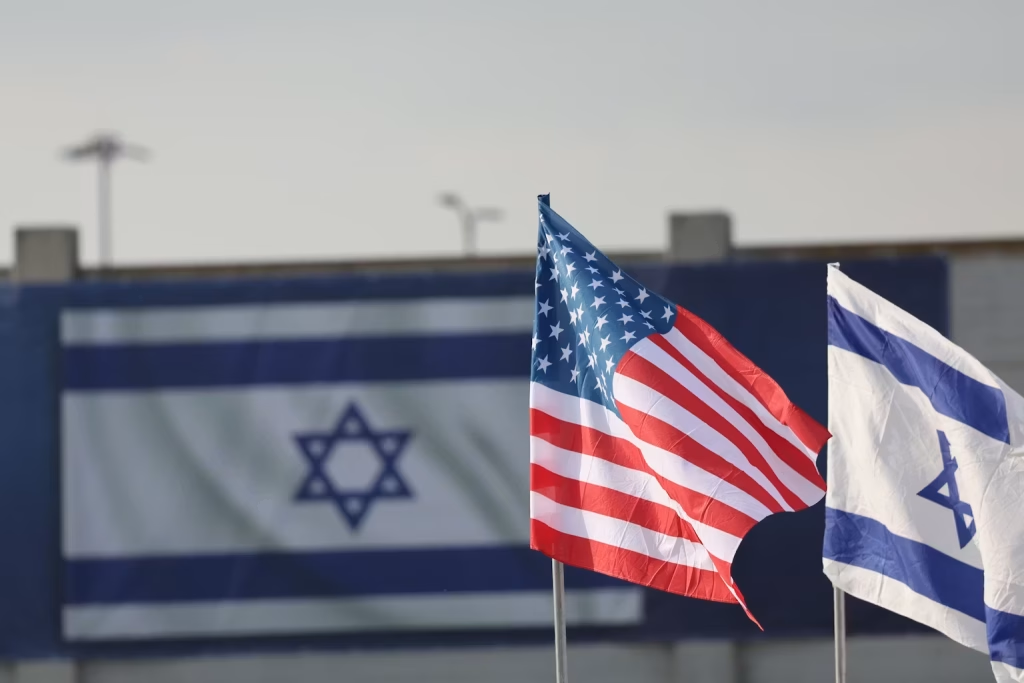
Innovascope has covered how precision drone technology developed by Israeli defense firms helps keep US soldiers safe, a relationship that extends well beyond military applications into civilian markets. Artificial intelligence is the newest frontier. Israel has one of the highest concentrations of AI startups per capita in the world, and American tech giants have been buying them up. Apple, Microsoft, Amazon, and Intel have all made major acquisitions of Israeli AI companies in the past few years.
The technology from those companies is now embedded in products used by hundreds of millions of Americans, from voice assistants to cloud computing to medical diagnostics. The talent pipeline runs both ways. Israeli universities produce a disproportionate number of graduates in computer science and engineering, many gaining practical experience in military intelligence units before entering the private sector. American companies have opened research centers in Israel to recruit from this pool. The engineers working at those centers are not just building products for local markets. They are contributing to global products used primarily by Americans and Europeans.
This is not charity in either direction. It is a partnership built on mutual benefit. The US gets access to technology it would otherwise have to develop from scratch. Israel gets funding, market access, and the strategic depth that comes from being tied into the American economy. Israel is emerging as a global AI leader with implications for American consumers that are bigger than most people appreciate. Innovascope tracks these developments and what they mean for the US-Israel relationship going forward.
