

In Hunters Creek Village, homes often look polished and well maintained. Still, some residents begin searching for mold inspection not because of visible damage, but because something feels slightly different indoors.
A faint odor after rain. A wall corner that seems darker. Air that feels heavier in one room.
It is rarely dramatic.
Subtle Indicators Of Air Quality Changes
Indoor changes usually show up in small ways first.
A closet that smells musty when opened. Condensation on windows that lingers longer than usual. Paint near baseboards that looks uneven.
Most people assume it is seasonal humidity. Sometimes that is true. But sometimes moisture stays trapped longer than expected, especially in tightly sealed homes.
And moisture that lingers tends to settle into materials quietly.
What Happens During A Full Property Evaluation
A proper inspection is methodical. It is not rushed.
It may include:
- Measuring indoor humidity levels
- Scanning walls and ceilings with moisture meters
- Inspecting attic airflow and insulation
- Checking areas near plumbing fixtures
These steps help identify hidden damp zones that are not obvious from the surface.
Because surface dryness does not always mean internal dryness.
The Role Of Professional Sampling
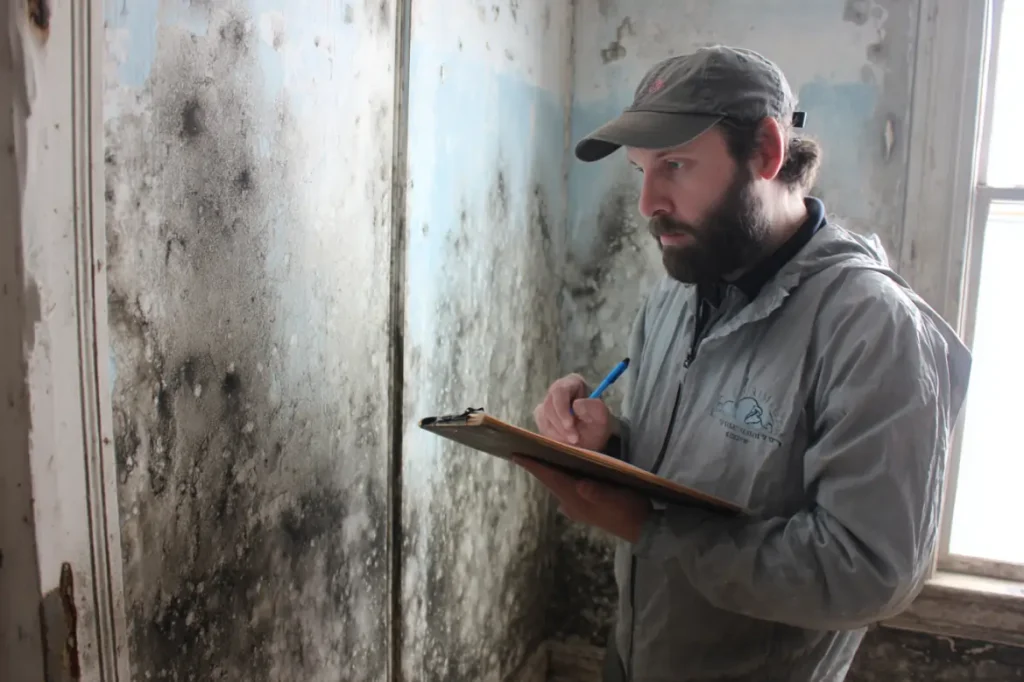
Air sampling collects particles from indoor air and compares them with outdoor readings. If indoor levels are unusually higher, that suggests imbalance.
Surface sampling focuses on specific spots to confirm what may be present on materials.
Sometimes testing confirms that levels are normal. That reassurance alone can be helpful.
Other times, results point toward next steps.
After Water Damage Or Storms
Storms and plumbing issues often leave behind more moisture than people realize. Even after visible water dries, humidity can remain in wall cavities or insulation.
You might consider testing if:
- There was recent roof leakage
- Plumbing repairs required wall removal
- A persistent odor developed after heavy rain
- Stains appear slowly over time
Not every water event leads to long term problems. But some do, especially if airflow is limited.
Improving Airflow And Reducing Humidity
After evaluation, prevention becomes practical.
Running exhaust fans longer. Using dehumidifiers during humid months. Repairing even minor leaks quickly. Allowing airflow behind large furniture placed against exterior walls.
These are not complicated changes. They just require attention.
Consistency matters more than intensity.
For homeowners seeking clarity rather than guesswork, scheduling Hunters Creek Village mold inspection provides measurable information about indoor air and moisture levels. Knowing whether conditions are balanced allows calm decision making instead of delayed reaction.
Homes should feel clean and steady. When the air feels slightly off, even without visible damage, addressing it early often prevents larger repairs later.